Where Perspective Meets Execution

Marks Baughan combines sector expertise with active transaction experience to deliver commentary and analysis that define the legal and compliance landscape.

Latest News and Insights

Blog /

From Copilot to Autopilot: How AI in IP Crossed the Line from Tool to Agent

By Chris Skoff, Managing Director, Marks Baughan In June 2025, we published…

By Chris Skoff, Managing Director, Marks Baughan

In June 2025, we published The Three Innovation Hotspots Drawing Investors to the AI-in-IP Frontier, which mapped the three IP areas where AI-driven startups were attracting the most early investment:

  • Portfolio analytics and competitive intelligence
  • Workflow automation
  • Patent application drafting

The piece argued that each hotspot represented a disruptive shift in the $200+ billion patent and trademark industry. A lot has happened since. Several of the companies we highlighted and spoke with — including Patlytics, DeepIP, Solve Intelligence, and Cypris AI — have raised significant new capital. New entrants have arrived with fresh backing from top-tier investors, and the technology itself has crossed a threshold.

Most notably, Cypris AI CEO Steve Hafif’s prediction that AI would move beyond drafting assistance into fully autonomous, “agentic” operation has gone from thought experiment to live product roadmap in under a year.

Let’s see how the regulatory and competitive landscapes have kept up.

From Tool to Agent

Hafif’s prediction was one that most of his industry was not yet ready to hear. The first wave of AI in patent practice was drafting assistance, prior art search, and office action responses. “Phase two,” according to Hafif, would be a world where AI agents would communicate directly with the United States Patent and Trademark Office (USPTO), then draft and submit patents without sustained human intervention. “Many people don’t know phase two even exists,” he said at the time.

One year later, phase two is here, and it’s a funding thesis. It’s also either the most exciting development in the history of IP law or a liability crisis in the making.

To understand the magnitude of the shift, one needs to grasp what “agentic” means in practice. The first generation of AI patent tools operated on a straightforward model: a human provides an input, the AI generates a useful output, and the attorney reviews, edits, and submits. The human remains the actor while the AI is a sophisticated drafting assistant.

Agentic AI doesn’t wait to be prompted with discrete tasks. It autonomously executes multi-step workflows, such as:

  1. Receiving USPTO correspondence
  2. Interpreting the examiner’s reasoning
  3. Generating a response strategy
  4. Drafting the arguments
  5. Filing the response directly

The attorney’s role shifts from drafter to supervisor and, in the ultimate visionary implementation, to approver of last resort.

DeepIP has leaned directly into this reality. In announcing its recent Series B, the company cited its investment in “the most advanced agentic AI capabilities to support complex patent work — helping teams scale without added overhead.”1 The goal is not to help attorneys work faster but to reduce the human labor required per task.

Solve Intelligence has articulated a similar vision, describing its ambition to become “the platform for in-house and outside counsel IP teams to collaborate across every part of the patent process.”2 Solve has said such a platform would be a system of record, not merely a drafting tool.

The Regulatory Reality

The USPTO’s interventions have largely clarified human responsibility. In April 2024, the USPTO issued its first formal guidance on AI use in patent prosecution, confirming that practitioners could use generative AI tools while practicing before the agency.3 However, it made clear that the duty of candor and good faith belonged entirely to the human attorney. Parties responsible for certifying the truth of statements must review AI-generated correspondence to correct any inaccuracies.

The inventorship question has been more fraught. In November 2025, the USPTO rescinded Biden-era guidance from 2024 and reverted to a simpler standard: AI systems are tools, equivalent in legal status to laboratory equipment.4 Any application listing an AI system as an inventor or joint inventor will be rejected outright. The Trump administration’s stance, consistent with its January 2025 executive order on AI, explicitly treats AI as a productivity instrument for human inventors — not a co-creator.5

These regulations tighten human accountability at the exact moment the technology is pushing toward greater autonomy. The more capable the AI agent, the higher the stakes of the attorney’s supervisory obligation.

The USPTO finds itself in an ironic tension as it embraces AI internally while imposing strict oversight standards externally. In March 2026, the agency launched Class ACT — the Trademark Classification Agentic Codification Tool — which automates trademark application pre-processing that previously took up to five months.6 The regulator deploying agentic AI in its own examination workflows is the same body holding practitioners to strict human accountability on the other side of the same docket.

The Hallucination Problem

AI’s accuracy issues are impossible to ignore. The legal profession has spent two years accumulating a costly body of evidence about what happens when AI-generated work goes unverified. As of this writing, researcher Damien Charlotin of HEC Paris has catalogued 1,275 “legal decisions in cases where generative AI produced hallucinated content.”7 854 of those originated in the U.S., and 808 of those occurred from January 2025 onwards. The Q1 2026 incident pace implies an annualized rate of more than 1,200 documented cases.

Courts have moved beyond issuing warnings. In March 2026, the Sixth Circuit levied $30,000 in punitive sanctions — $15,000 per attorney — against two Tennessee lawyers whose briefs contained more than two dozen fake or misrepresented citations, and referred the matter to the chief judge for potential disciplinary proceedings.8

In patent litigation specifically, a federal judge in the District of Kansas sanctioned five attorneys a combined $12,000 after their briefs in a patent infringement case were found to contain fabricated citations and nonexistent quotations generated by ChatGPT. The attorney who used the AI tool without verifying its outputs received the steepest penalty and was ordered to self-report to his state bar.9

The leading platforms have responded by investing heavily in what might be called anti-hallucination architecture, which includes citation support, exposed AI reasoning chains, and retrieval-augmented generation that anchors outputs to verified source documents. These are genuine engineering investments, but as legal ethics experts have noted, rubber-stamping AI output offers no protection against malpractice claims. Over 35 state bar associations issued formal guidance on AI use by early 2026, with requirements varying across jurisdictions.

The Horizontal Threat: General-Purpose LLMs Enter the Room

Any discussion of the AI-in-IP sector must include the largest players circling the market from above.

OpenAI, Anthropic, and xAI/Grok are not yet building dedicated patent or trademark products, but they’re becoming the underlying infrastructure on which the entire IP vertical runs. Simultaneously, they’re expanding their own horizontal legal capabilities in ways that put them on a collision course with the specialist tools.

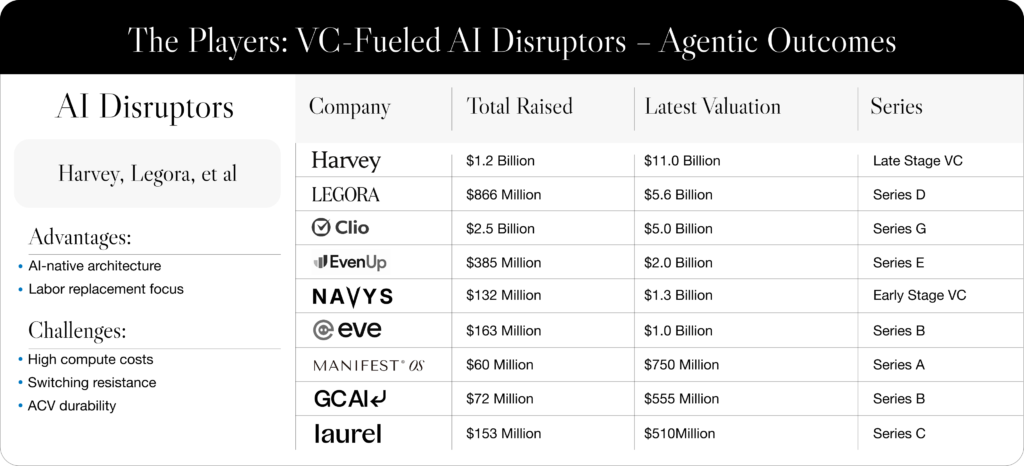
The most direct market entrant is Harvey, the legal AI platform backed by OpenAI’s startup fund and now valued at $11 billion after raising $200 million in March 2026 — its fourth funding round in just over a year. Harvey has moved quietly but deliberately into IP workflows. In early 2026, the company released five workflow templates specifically targeting patent and IP litigation teams, covering:

  • Infringement claim charts
  • Office action analysis
  • Invalidity contentions
  • License agreements
  • Filing documents

IP teams are already using Harvey to analyze trademark examiner refusals, compare cited marks, assess goods and services descriptions, and more. Harvey is not a patent specialist, but its expansion into IP workflows is a direct competitive statement to the vertical specialists.

Legora, the Swedish-founded collaborative legal AI platform that recently raised $550 million in a March 2026 Series D at a $5.55 billion valuation, represents the European flank of the same dynamic. Built on Anthropic’s Claude and now deployed across more than 800 law firms and in-house legal teams in over 50 markets, Legora’s platform covers document review, drafting, research, and agentic workflow automation. As Legora expands aggressively into the U.S. market, its platform increasingly covers the same IP workflow territory that dedicated tools like Solve Intelligence and DeepIP have built as their core.

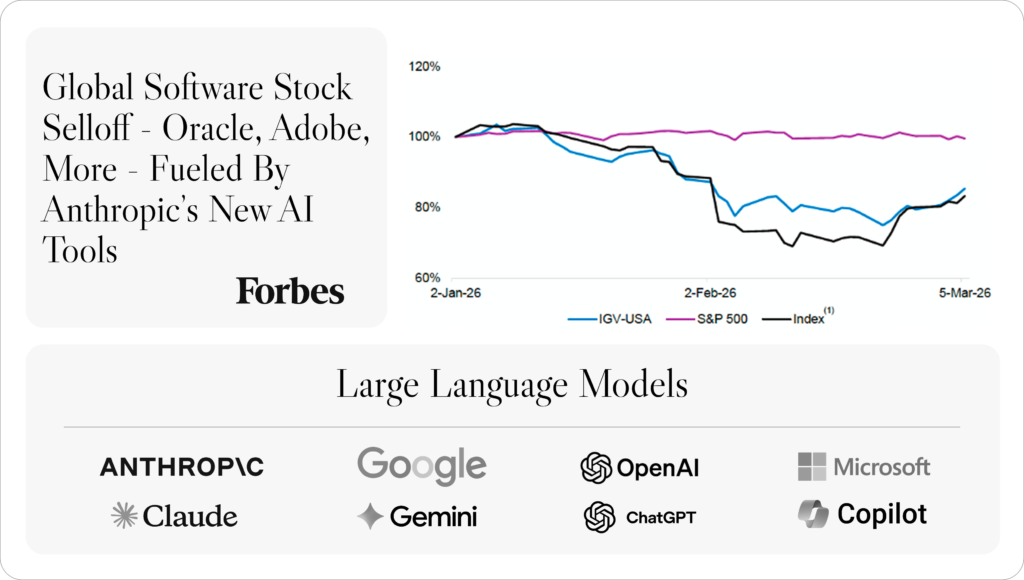
Anthropic itself moved directly into legal territory in early 2026 with a legal plugin that triggered sharp sell-offs among legacy incumbents. Thomson Reuters fell as much as 18% and RELX dropped 14% in a single session — what many now refer to as a “SaaSpocalypse” for legal software stocks.10 With Claude powering Legora and several other legal platforms, Anthropic is now also a direct participant in the market through its own tooling.

These movements have shaped a competitive landscape that did not exist when we wrote our prior article. Now, the market has a two-tier structure in which horizontal legal AI giants (Harvey, Legora) compete with each other and with the underlying model providers (OpenAI, Anthropic, xAI), while vertical IP specialists (Solve, DeepIP, Patlytics) compete on depth and domain specificity. The vertical specialists have a clear answer to the horizontal threat: purpose-built systems understand the structure and logic of patent claims, the nuances of prior art, and the technical requirements of USPTO prosecution in ways that no general-purpose platform can match. That argument has merit, and for now, it appears to be resonating with IP teams who have tested both.

The question the market will answer over the next 24 months is whether that depth advantage is durable enough to hold as the horizontal platforms compound their training data advantages, law firm relationships, and balance sheets.

The Capital Doesn’t Wait for the Questions

Whatever the unresolved liability and competitive questions, the investment community has continued to pile in, and the companies that our 2025 article identified as early movers have rewarded that confidence with striking trajectories.

Solve Intelligence, which had just closed a $12 million Series A when that piece went to press, raised a $40 million Series B eight months later in December 2025, bringing total funding to $55 million. Annual recurring revenue had grown more than tenfold year-over-year, reaching eight figures, and the company had become profitable. Alongside the raise, Solve launched “Charts,” a new product targeting patent litigation and high-volume IP analysis — a significant expansion beyond its original drafting focus. In April 2026, Solve continued that expansion with the acquisition of Palito.ai, a Munich-based AI patent litigation startup, adding validity analysis, case law research, infringement mapping, and German court workflow capabilities to its platform.11

DeepIP closed a $25 million Series B in early March 2026, bringing total capital to $40 million and ARR growth of more than tenfold over 18 months.11 The company’s platform is now used by more than 400 law firms and corporate IP teams across 25 jurisdictions. Its positioning as “the system of record for AI-native patent work” is a direct play in Hafif’s phase two. The goal is not to assist innovation teams and practitioners with specific tasks but to become the infrastructure layer on which all patent operations run.

Patlytics, which closed its $14 million Series A at the time of our 2025 article, raised an additional financing round in October 2025 and secured Series B funding in April 2026 — bringing the total raised to $80+ million.11 The company announced a strategic partnership in February 2026 with RPX Corporation, a leading patent risk solutions provider, signaling that the compound startup model Patlytics’ CEO described early on is now attracting established players in the broader IP ecosystem.

The New Entrants

Success breeds competition, and the validation provided by these funding rounds has drawn a new cohort of well-capitalized entrants. Ankar, founded in 2024 by former Palantir engineers Tamar Gomez and Wiem Gharbi, raised a $20 million Series A led by Atomico in December 2025, bringing total funding to $24 million.12 The company’s platform searches across 150 million patent applications and 250 million scientific publications, turning invention disclosures into draft applications with strategic guidance on claim scope. It has already attracted L’Oréal and law firm Vorys as customers. Atomico’s participation signals that European venture capital is now taking the AI-in-IP sector seriously as a cross-Atlantic opportunity.

The competitor map has thickened across all three of the hotspots we identified in our 2025 article. Portfolio analytics, workflow automation, and patent drafting have moved from nascent categories to contested ones, as well-funded platforms compete for enterprise IP teams and Am Law 100 firms under the shadow of horizontal legal AI giants.

What Phase Two Actually Requires

Right now, the technology is ahead of the governance, and the governance is ahead of adoption. The tools are capable of executing agentic workflows. The regulatory framework demands human accountability for every document submitted to the USPTO. The bar associations are clarifying that AI proficiency is now a baseline professional competency. And the courts are making clear that “the AI did it” is not a defense.

Phase two, in which AI agents autonomously navigate the patent lifecycle at scale, is a new framework for professional accountability that does not yet exist. It requires:

  • Clarity on where machine liability ends and attorney liability begins
  • Malpractice insurance products designed for agentic systems
  • USPTO processes that can accept, validate, and respond to AI-native filings without creating new vectors for error

Given the two-tier competitive dynamic now taking shape, it also requires IP professionals to make a bet on whether the future of their workflow infrastructure belongs to a deep vertical specialist or a horizontal platform that’s rapidly closing the domain expertise gap.

None of those frameworks or answers exists today, and the platforms building toward phase two know this. The smarter ones are investing in trust infrastructure such as citation trails and audit logs because their enterprise customers and regulators require it.

See You in London

We’ll be attending the INTA Annual Meeting 2026 in London, May 2-6, where AI developments in IP will surely be a hot topic. We are eager to stress-test the views in this article against the practitioners and investors who are living them in real time.

We look forward to many good conversations and expect to come away from London with new insights and a follow-up piece. If you’ll be at INTA 2026, we’d welcome the chance to compare notes. Reach out to me at cskoff@marbau.com.

Sources

  1. DeepIP reaches $40M to lead the AI patent platform market. (n.d.). https://www.deepip.ai/blog/deepip-40m-funding-ai-patent-platform 
  2. Parsonson, C. (2025, December 9). Solve Intelligence raises $40M Series B to build AI for patents and launches charts. https://www.solveintelligence.com/blog/post/solve-intelligence-raises-40m-series-b-to-build-ai-for-patents-and-launches-charts 
  3. Guidance on use of Artificial Intelligence-Based Tools in practice before the United States Patent and Trademark Office. (2024). [Notice]. Federal Register, 89(71), 75191–75193. https://www.govinfo.gov/content/pkg/FR-2024-04-11/pdf/2024-07629.pdf 
  4. Revised inventorship guidance for AI-assisted inventions. (2025, November 26). United States Patent and Trademark Office. https://www.uspto.gov/subscription-center/2025/revised-inventorship-guidance-ai-assisted-inventions 
  5. Stopperich, M. (2025, January 23). Removing barriers to American leadership in artificial intelligence. The White House. https://www.whitehouse.gov/presidential-actions/2025/01/removing-barriers-to-american-leadership-in-artificial-intelligence/ 
  6. Trademark classification goes agentic with USPTO’s announcement of “Class ACT” assistant. (2026, March 19). United States Patent and Trademark Office. https://www.uspto.gov/about-us/news-updates/trademark-classification-goes-agentic-usptos-announcement-class-act-assistant 
  7. AI Hallucination Cases Database – Damien Charlotin. (n.d.). https://www.damiencharlotin.com/hallucinations/
  8. Sixth Circuit slaps steep sanctions on two lawyers for fake citations and misrepresentations in appellate briefs. (2026, March 18). LawSites. https://www.lawnext.com/2026/03/sixth-circuit-slaps-steep-sanctions-on-two-lawyers-for-fake-citations-and-misrepresentations-in-appellate-briefs.html  
  9. Freedman, L. F. (2026, February 9). Judge issues public admonition + $12,000 sanctions for hallucinations. The National Law Review. https://natlawreview.com/article/judge-issues-public-admonition-12000-sanctions-hallucinations 
  10. Anthropic Enters Legal Tech, Legal Tech Enters Freefall. (2026, February 4). abovethelaw.com. https://abovethelaw.com/2026/02/anthropic-enters-legal-tech-legal-tech-enters-freefall/ 
  11. PitchBook
  12. Kahn, J. (2025, December 17). Exclusive: AI for patent filings startup Ankar secures $20 million Series A round | Fortune. Fortune. https://fortune.com/2025/12/17/exclusive-palantir-alums-aiming-to-streamline-patent-filings-with-ai-secure-20-million-in-series-a-venture-funding/
Read More
News /

Marks Baughan Advises zetVisions GmbH on Its Acquisition by Volaris Group

Marks Baughan Securities was exclusive financial advisor to zetVisions GmbH and its…

Marks Baughan Securities was exclusive financial advisor to zetVisions GmbH and its shareholders in connection with the sale of the company to Volaris Group.

Volaris Group has announced the acquisition of zetVisions GmbH, a leading German software provider for enterprise equity and master data management. This further expands Volaris Group’s German portfolio in a high-growth segment. 

zetVisions GmbH is a specialized software provider headquartered in Heidelberg, Germany. For over 20 years, the company has been developing and implementing solutions that provide structured oversight, maintenance, and compliance for corporate entities across global jurisdictions. Its customers include numerous publicly listed companies, medium-sized businesses, and public sector entities. Based on more than 400 successfully completed projects across various industries, zetVisions offers in-depth expertise in international legal entity management.

Christian Sohn and Erik Tischner, Managing Directors of zetVisions GmbH, said, “Joining Volaris Group is an important step for the continued growth and innovation of zetVisions GmbH. We see great potential in the Volaris Group ecosystem to continue our growth trajectory, leverage the group’s best practices, and further develop our solutions in the direction of AI. With over 1,000 portfolio companies, the group offers enormous added value through the exchange of knowledge and experience.”

Raimund Schlotmann, Portfolio Manager at Volaris Group, added: “With its deep expertise in this attractive market segment, zetVisions is an excellent fit for Volaris Group’s focus. We look forward to supporting the zetVisions team in advancing their vision for Legal Entity Management software and continuing their success story.”

About Marks Baughan Securities

Marks Baughan provides global investment banking services to growth companies in the legal and compliance sectors. Our clients are software, technology-enabled services, and data-intensive companies seeking shareholder liquidity or growth capital, as well as law firms and other legal asset platforms exploring outside investment. With a record of +125 transactions totaling more than $10 billion in value across M&A, capital raising, and strategic advisory, we bring unmatched expertise, negotiating skill, and market intel to every client relationship. Our professionals excel at defensible positioning and disciplined processes that maximize shareholder value, and they give our clients access to the networks and experience derived from years of interaction with top executives and investors in legal and compliance. 

Learn more at www.marksbaughan.com.

For more information on this transaction, please contact:

John Jacobs, Managing Member
+44 7775 902 410
jjacobs@marbau.com

About Volaris Group

Volaris Group acquires, strengthens, and grows vertical market technology companies. As an Operating Group of Constellation Software Inc., Volaris focuses on enabling businesses to thrive in the markets they serve — through investment in people, products, and customer relationships. Learn more at www.volarisgroup.com.

Read More
News /

Marks Baughan Advises Autire on Investment from Serent Capital

Marks Baughan served as the exclusive sell-side advisor to Autire in connection…

Marks Baughan served as the exclusive sell-side advisor to Autire in connection with its growth investment from the private equity firm.

Serent Capital, a growth-focused private equity firm investing in founder-led B2B SaaS and technology companies, today announced an investment in Autire, a cloud-based and AI-powered software platform built to support CPA firms performing employee benefit plan (EBP) audits.

Employee benefit plan audits represent one of the most specialized and compliance-driven areas within the accounting profession. As regulatory expectations increase and audit firms face ongoing capacity constraints, many continue to rely on fragmented tools and manual workflows. Autire was founded to provide a more centralized, technology-enabled approach to managing these engagements and automating the work.

Built by CPA professionals with direct experience conducting EBP audits, Autire’s platform brings together workflow management, automated data processing, and structured documentation support for retirement plan audits, including 401(k), 403(b), and ESOP plans. The software is designed to help firms improve consistency, reduce administrative burden, and create a more standardized audit process.

“EBP audits sit at the intersection of regulatory complexity and operational intensity,” said Stewart Lynn, Partner at Serent Capital. “Based on Serent’s thematic work, we identified Autire as one of the true innovators in this market. In an industry historically dependent on manual processes, Autire has combined AI and technology with deep specialized knowledge to drive impressive efficiency and strong outcomes for its customers. We are excited to partner with Brian and his team to scale Autire and to deliver further innovation.”

Autire was founded by Brian Price to address inefficiencies he observed firsthand in traditional EBP audit execution. The company has grown its platform in close collaboration with accounting firms seeking more scalable, technology-enabled approaches.

“When we started Autire, we weren’t trying to incrementally improve the existing process, we wanted to rethink the infrastructure behind it,” said Brian Price, Founder and CEO of Autire. “We were looking for a partner who understands vertical software and respects the importance of building alongside practitioners. Serent brings that experience, along with operational support that will help us scale thoughtfully.”

Through the partnership, Autire will leverage Serent’s Growth Team to support initiatives across AI and product development, go-to-market strategy, executive recruiting, and long-term strategic planning.

Additional terms of the transaction were not disclosed.

For more information on this transaction, please contact:

Chris Rose, Managing Director
+1 610.616.3298
crose@marbau.com

John Martin, Vice President
+1 267.574.1317
jmartin@marbau.com

Kevin Mathew, Associate
+1 610.716.1040
kmathew@marbau.com

Gunnar Bogorowski, Analyst
+1 267.454.4848
gbogorowski@marbau.com

Jake Tavroff, Analyst
+1.516.209.8065
jtavroff@marbau.com

About Marks Baughan Securities
Marks Baughan provides investment banking services to growth companies. Our clients are software, technology-enabled services and data-intensive companies seeking shareholder liquidity or growth capital. We work tirelessly alongside our clients and excel at defensible positioning and disciplined processes that maximize shareholder value. Our professionals come from senior positions at bulge-bracket firms, giving our clients access to the relationships and experience that come from our years of interaction with the top executives and investors in companies in our fields. Our clients receive top-flight advice throughout any advisory relationship, because our boutique approach allows our senior advisors to stay deeply involved with each client on a continuous basis. No handoffs to junior staff. No preferential client relationships. No conflicts of interest.

For additional information on Marks Baughan, see www.marksbaughan.com.

About Autire
Autire provides a cloud-based software platform designed to support CPA firms performing employee benefit plan audits. Built by practitioners with experience conducting retirement plan audits, the platform is designed to help firms standardize workflows, enhance documentation, and improve operational efficiency. Learn more at www.autire.com.

About Serent Capital
Serent Capital is a growth-focused private equity firm that invests in capital-efficient B2B SaaS and technology companies. Since its inception, Serent has taken a distinctly different approach, prioritizing founders and their companies and delivering true hands-on partnership and operational support through its in-house Growth Team of 25+ full-time professionals.

By partnering with Serent, founders gain access to strategic and operational resources aimed at accelerating growth, including revenue generation support, executive hiring, transformative M&A guidance, and a curated network of 400+ founders and operating executives. With $6 billion in assets under management, Serent has partnered with more than 70 founder-led, category-leading companies, helping them scale with confidence. Learn more at www.serentcapital.com.

Read More

Recent Case Studies

Recent Thought Leadership

Recent Thought Leadership

Recent Case Studies

Webinars

Exclusive Insights

More From Marks Baughan